Subscribe For Free Updates!

We'll not spam mate! We promise.

Showing posts with label google. Show all posts

Tuesday, 11 August 2015

Review: Oneplus Two still a Flagship killer?


oneplus two_01

In today’s world where mobile company’s and smartphones perish at same rate they are launched in the market, oneplus has really made a name for itself in this cut-throat competition. 


Last year with the launch of the cost-effective oneplus one also known as the ‘Flagship Killer’ they got a strong foothold in the industry. Let’s find out if they can mimic the success with their latest smartphone the oneplus two.


OnePlus two Display And Design


oneplus two

The oneplus two has the same sandstone back as the original one but looks sharper and a tad bit smaller although it has the same screen size of 5.5in with 1080p panel with 401 ppi.

The oneplus two has become a bit thicker at 9.9 in comparison to 8.9 and somewhat heavier at 175 g from 162 g in oneplus one.

Dimensions, are 151.8 x 74.9 x 9.85 mm.

It also utilizes a aluminum and magnesium lodging with steel control keys and outline for a more premium feel, style and look.

Buyers will also have the option the change its back panels i.e. StyleSwap back panels from Bamboo, Kevlar to apricot and rosewood which will help to enhance the overall appeal of the device.

The display takes up most of the front part, adding to the improved appearance of this new and updated model. It also has a improved IPS LCD screen with better color and brightness. However, the basic display specifications have not been changed whatsoever.


OnePlus two RAM, Processor & Battery


oneplus two_02

According to OnePlus' pre-dispatch data given to its group, the OnePlus two packs a Qualcomm Snapdragon 810 64-bit which is a octa-core processor, it also has 4GB of RAM on the 64GB storage variation, whereas the 16GB model has less RAM of 3GB. The battery pack is evaluated at 3,300mAh and with moderate usage we should be able to use it for a whole day without plugging it in.


OnePlus two Ports, Connectivity & Other Hardware


The OnePlus two packs the new Type-C USB standard, permitting clients to exploit the new Type-C cable which can be put whichever way round. Be that as it may, on the off chance that you claim more seasoned microUSB problems (as a great many people do) then apprehension not as OnePlus will package in a connector. The handset has double nano SIM support and full 4G LTE capacities on both the sim’s.


There's likewise a unique finger impression scanner incorporated with the physical home key, with backing for up to five fingerprints, and it's said to work in 0.5 seconds which you can argue might be faster than that on iPhone 6.


OnePlus 2 Camera


The back confronting essential camera is appraised at 13MP with a vast f/2.0 opening. It utilizes optical picture adjustment (OIS) which helps for better videos in freehand, substantial ultrapixel tech, double LED flah and laser concentrate, mixes with 4K feature catch and 720p slow-mo at 120fps. It additionally has a six component lens and is guaranteed to include incredible low-light execution.


The front-confronting selfie camera is appraised at 5MP and can also shoot full HD at 1080p. 


OnePlus two Software


Rather than CyanogenMod, this time you get OxygenOS, which is a genuinely quite light based on top of Google Android. However much as could reasonably be expected, OnePlus has attempted to keep things near stock, yet there are a couple changes and widgets here and there. Things are looking unadulterated and Material Design unwavering.


OnePlus 2 Price, Availability & Release Date


The 16GB stockpiling base model is estimated at £239 while the higher-end 64GB choice expenses £289. OnePlus is again working a welcome just acquiring framework, in spite of the fact that it's as far as anyone knows going to be less focused this time as the firm guarantees a bigger load of gadgets. Requests are relied upon to go live on August 11.


Here's the official line from OnePlus:


"You can get a welcome from companions who have obtained an OnePlus 2 as of now, or by taking an interest in our challenges and advancements. For notices about our challenges and welcomes, subscribe to our pamphlet/newsletter, join our group on the discussions, or tail us on online media”


Read here: Windows 10 features and reviews 


Tuesday, 21 July 2015

Kyocera releases DURA SCOUT !!


Japanese based smartphone manufacturer Kyocera has launched its new smartphone the DURA SCOUT.
The smartphone comes with a 4.5”,720p HD, Kyocera Sapphire Shield Touchscreen. The device runs on Android™ 4.4.2 (KitKat), powered by a MSM8928 chipset, with a Qualcomm® Snapdragon® 400 processor clocked @ 1.4 GHz quad-core CPU. The device is packed with 2GB RAM and 16 GB ROM and supports a miicroSD card upto 32GB.
The device is 136.4 x 68.4 x 13.2 mm thick and weighs 187 g.
The Key features of this smartphone are :
o   Sapphire Shield™ The DURA SCOUT’s touchscreen is made out of sapphire which is virtually scratchproof and provides an outstanding damage against impact damage.
o   The smartphone is waterproof and dustproof
o   Speakers Loud, dual front speakers and smart sonic receiver technology allows you to hear clearly even noisiest environments
o   Smartphone supports Glove and Wet Touchscreen
o   The smartphone is 4G LTE Android™
o   The smartphone offers dedicated hard keys for navigation, large side key for programming frequently used apps like Email, Calendar,  Maps etc.
o   The smartphone comes with a bunch of sensors such as 3-axis accelerometer, proximity sensor, ambient light sensor, digital compass and barometer.
o   The smartphones has a primary camera of 8 MP with LED flash and auto focus and a 2 MP front facing camera recording live videos at 1080p @ 30fps.
o   The smartphone is packed with a 3100 mAh non-removable Li-Ion battery with wireless charging
o   The device supports Wi-Fi hotspot up to 8 3G and 4G connections
o   The device is Wi-Fi CERTIFIED Miracasi® a/b/g/n/ac, 2.4 and 5 GHz
o   It supports Bluetooth® v4.0

Anyone of you who has any used this smartphone kindly hare your experience with us by commenting in the box below. You can also follow us on Instagram, Google+ and Facebook.

Check- Teachers Day Best quotes
Teachers Day Quotes

Wednesday, 15 July 2015

Google's Beacon VS Apple's iBeacon !!


Google has introduced a number of new products around Bluetooth Low Energy (BLE) beacons in an effort to challenge Apple’s iBeacon ecosystem.
These new products include a new open beacon format, tools and APIs for building apps and services on top of beacons, and a new developer-centric service for managing and monitoring large beacon deployments.
Google has long been interested in Bluetooth beacons. For example, Google’s Nearby project which is also launching as an API . While Nearby also uses other signals (WiFi, audio, etc.), BLE beacons are clearly at the center of Google’s efforts.
The first of Google’s new beacon products is the Eddystone format. The company is releasing the new format under the Apache 2.0 open source license on Github. The new format is meant to give developers a more robust and extensible way for working with beacons, as Google product manager Matthew Kulick told.

Google has already worked with beacon hardware vendors like Bluvision, Estimote,Kontakt.io, Radius Networks and Signal360ato build the Eddystone format into their devices. The new format is completely platform agnostic  and any existing beacon can be made Eddystone-compatible with a firmware update.
 Google is also launching two new APIs for developers who want to use beacons for their apps. The Nearby API for Android and iOS now makes it easier for apps to find and communicate with devices and beacons that are well nearby. The Proximity Beacon API then takes this a step further and helps developers associate a location and related data with beacons. That data is stored on Google’s servers.
Google also launched a new tool for beacon fleet management.
“We want to make it easier to move from piloting your beacon-assisted apps to getting to scale,” Kulick said.
This new service sits on top of Google’s Eddystone telemetry framework and developers can then take this data and build their own services and dashboards on top of the data they get from this. But for now, Google won’t offer it’s own dashboard. Also the company has no plans to charge for this service.
Google’s own products, will also make use of this new technology. Google Now will also be able to use this service to bring up contextual information, for example, when you are in a restaurant, you will be able to see the menu in Google Now


Monday, 13 July 2015

3 amazing technologies that can enhance your smartphone

Gas sensors


New inexpensive wireless sensors developed by chemists at MIT detect gaseous ammonia, hydrogen peroxide, cyclohexanone and other dangerous gases, and can be read by a smartphone.

The gas-sensor- tag and smartphone reading combo would make it super easy to measure explosive chemicals or hazardous environmental pollutants.
The chemical readings from smartphones could be combined with geolocation data to track and map hazardous regions. Also, a sensor could be fixed to food so that anyone with a smartphone could assess the freshness of food. The sensors could measure chemicals released by rotten or spoiled food.

Ridiculously Accurate GPS


Geolocation technology is already widely used in
smartphones. That's how and why you can follow driving directions with Google maps, get picked up by an Uber, or ask your smartphone to locate the closest Starbucks. But geolocation software developed by engineers at the University of Texas at Austin makes it possible to identify a position accurately to within a centimeter using the inexpensive antenna sensors that are in smartphones.

Synced with the camera in your smartphone, this down-to-the-centimeter GPS would make it possible to instantly map your surroundings in 3-D, increasing the subtle sophistication of virtual reality technology. Also, centimeter- specific geolocation would allow cars to sense and avoid each other in more nuanced situations.

Spectrometer


A spectrometer is a tool typically used in physical,
chemical and biological research that measures properties of light to analyze an object's chemical makeup.

A company called Consumer Physics introduced a handheld spectrometer named Scio last year, and more recently, MIT announced that scientists at the
university have developed a spectrometer, enough to fit inside a smartphone camera. In a
smartphone, a spectrometer could give users an easy and accurate way to detect skin conditions, track a person's vital signs or identify environmental pollutants. It could also give users a way to find out what's in their food or medication.

5 must-have apps for your smartphone

5 must-have apps for your smartphone


Sketchbook by Autodesk Inc.


If you like to draw, then you will enjoy having this app on your phone. Sometimes you don’t have time to get your sketchbook out of your bag, so now when you’re out and about, or waiting for your next class, you’ll always have a sketchbook in your phone to draw any inspirational image that has popped in your head at that moment.

Netflix for iPhone or Android


Netflix is super popular and you probably live under a rock if you don’t already have a subscription. Most of us don’t always have time to keep up with (i.e. binge-watch ) our shows. If you’ve never considered downloading it on your phone, take it from me, you will never miss your favorite show again! You can be at work, taking your 30 minute lunch break, and simultaneously catching up on the next episode of Orange is the New Black!

Kindle App by Amazon


If you’re a bookworm, then you probably already have a Kindle. Which means your email is attached to your account, so no matter what you are using, like your laptop or iPad, you can sync it with the book you’re currently reading. Why not take it a step further and download it on your phone as well? Books read surprisingly well on a smartphone. So, you’ll have all your books available on your phone to read at any time. Score one for the bookworms!

Google Sky Map


If you are fascinated with space, stars, and everything from the great beyond, then you will love this app. It combines your gps, compass, and accelerometer, so when you point your phone to the
sky, it lets you to see details of the universe. This is such a great app to help you explore all the stuff you can’t see with the naked eye.

Aviary Photo Editor


If you enjoy taking photos, then you will love this app. Often, you don’t have the space or want to carry your professional camera to every stop you make. Having a good photo editor on your phone will make any photo look professional!

I hope you guy enjoyed this article. We just love writing about apps! Let us know in the comments if you liked any of them as much as we do!

Sunday, 12 July 2015

Google launches preview 2 for Android M !!


Google has released a new version of its new Android M operating system.

According to the new version is called Android M Developer Preview 2 which has some bug fixes and security upgrades plus some API improvements.

Google has assured that when it is it will have some exciting new items for instance an improved App Permissions system that will seek permissions only when required and Android Pay, a built-in mobile payment system similar to Google Wallet but built in at the OS level.

Also, a new feature called Doze which is an enhanced power-saving logic for apps that sync while the users device is asleep and support for USB Type C.

To get the new build, the users will require a Nexus 5, Nexus 6, or Nexus 9. The users who are presently running the last Android M release, they can get the new version via the built-in OTA update screen. If not, download the image and install it on the device.

Wednesday, 8 July 2015

Next OnePlus phone to have 4GB RAM !!


The OnePlus 2 will have a beefy 4GB of LPDDR4 RAM to take on other Android device manufacturers’ flagship devices this year.
The Chinese smartphone maker has also confirmed that its next phone will be priced under $450 when it launches later this month. That’s up $100 from the original price of the 64GB OnePlus One, which cost $350 when it launched last April.
OnePlus says that its choice of RAM brings benefits like lower power consumption and twice the bandwidth performance of LPDDR3 RAM. It’s also 1GB more than Samsung’s recently launched Galaxy S6.
The company has previously revealed other details about its upcoming device, including a fingerprint sensor, USB-C port and a Qualcomm Snapdragon 810 v2.1 processor.
In a Google+ post, CEO Pete Lau promised that the device will cost less than $450. He added, “”Honestly, it’s never been about the price. We simply make the best smartphones we can, and we go from there.”
It’ll be interesting to see if the sub-$450 price is low enough to give OnePlus an edge over the competition. For comparison, the 32GB Galaxy S6 (unlocked) retails at about $684 from AT&T and $600 from Verizon; the HTC One M9 went on sale for $649 in the US when it launched around the end of March.

Saturday, 4 July 2015

Google Glass can make a come back !!

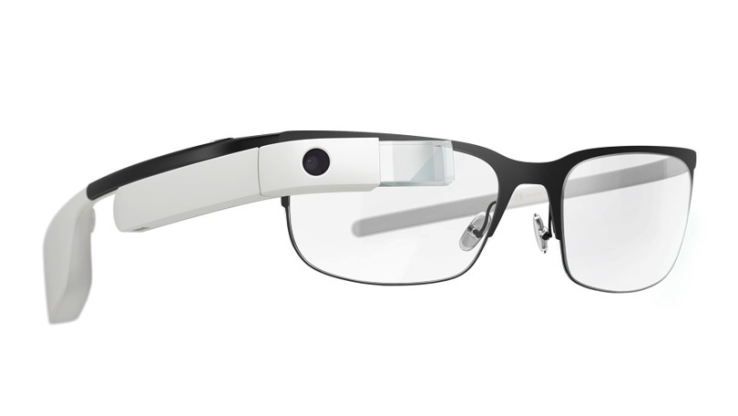
It’s been a long time since we heard anything about Google Glass. Yes, we are talking about that spectacle containing a tiny computer, whose production was stopped by Google earlier this year. It could have been the end of it, but Google never stopped developing the project. Today, a report has came out that says Google Glass could resurface again.

According to Droid Life, an FCC (Federal Communication Commission) filing by Google indicates that the company is working on a new version of Google Glass. Filed under the FCC ID A4R-GG1, the term ‘GG’ indicates Google Glass. Unlike most devices, which are labelled in FCC as mobile or a wearable, this one has been labelled as “BLUETOOTH & DTS/UNII a/b/g/n/ac” with model name “GG1″.
According to the website, the device has Bluetooth LE and rechargeable, non-removable batteries that can’t be accessed…. the product comes with an AC charger and USB cable that when connected to a PC, can provide a “path for charging and data transfer.”
For all we know, the device could be a smartphone or a tablet, but the fact that it hasn’t been labelled as a phone or wearable and Google used the initials GG, this could be the next version of Google Glass. Of course, it’s all speculation until and unless Google announces it.


Thursday, 2 July 2015

Cyanogen brings Gello

Android ROM developer CyanogenMod is working on Gello, an open-source browser based on Google’s Chromium project that includes loads of customization options.
Early demo videos show features from the current build that may or may not make it to the final version.
Some features which are included are :
  •  offline reading mode
  • immersive and night modes
  •  site-by-site settings for privacy and security 
  •  ability to save downloads in a preferred location and name files before saving them.

It’s worth noting that Gello won’t be released on Cyanogen OS, which runs on the popular OnePlus One phone;  Instead, it will be available in a future version of CyanogenMod’s Android ROM.
CyanogenMod doesn’t yet have a release date for Gello. The team noted that its browser won’t be compatible with older devices that have a small storage partition.

Here's a demo video  for a chromium-based browser for CyanogenMod!

Wednesday, 1 July 2015

APPLE'S PROGRAMMING LANGUAGE SWIFT IS NOW OPEN SOURCED !!!!

Apple’s new launches at WWDC 2015 showed off many new features and capabilities of both the new iOS 9 and OS X El Capitan. However, the highlight of the evening was when Craig Federighi announced on the stage today that one of the most powerful coding languages, Swift,  would become “Open Source”
Swift 2.0 adds a bunch of features that developers have been asking for, to ensure that apps written in Swift are faster and can do more.
“Open source” means  that any developer, anywhere in the world, can contribute new features and updates to a software project — totally for free.
Google’s popular Android mobile OS, for example, is open source, which is how smartphone manufacturers can release devices with versions of Android that are slightly different from each other.
Does this mean other manufacturers will be able to make iOS devices – probably not. However with the code becoming open-source, bug fixes and features would develop faster. Swift becoming Open Source will also allow other operating system manufacturers including Google and Microsoft to utilise the features and apply them to their code if they so choose to.
This will allow Android forks like Cyanogen and MiUi to add enhancements to their performance and capability. However, this will also depend on inclination and need to do so from others.

16 of the best Android apps from June

June was a busy month for Android apps, from pure productivity to an app that will make personalized game recommendations for you and much in between.
We also take a look at a painfully simple way of streaming porn on your Android device, if that’s your sort of thing. PushBullet managed to score two slots in our roundup this month and Medium finally got around to launching its first Android app, more than a year after debuting on iOS.
All you have to do is cast your eyes over the list below and choose your favorites.
1. Adobe Creative Cloud

June 2015 was the first time four of Adobe’s Creative Cloud apps made it onto Android – namely, Photoshop Mix, Color CC, Brush CC and Shape CC — all of which were already available for iOS devices.
Mix lets you combine images, tweak color and play around with your photos; Shape lets you capture and convert images into vector graphics for use in Illustrator CC and Photoshop CC; Brush CC converts photos and graphics into bespoke brushes and Color CC lets you sample colors in a scene to create themes for use in Illustrator, InDesign and Photoshop.

Best of all, the apps are free, regardless of whether you have a creative cloud subscription or not.
2. DoubleTwist

If you’re the sort of person who has a lot of music scattered about different cloud services, DoubleTwist for Android is an app for you.
In a nutshell, it makes your tracks stored in Dropbox, Google Drive and OneDrive accessible and directly playable from your Android device.


After the seven-day trial is up, you’ll need to pay a one-off fee of $8.99/£4.99 to keep using the premium features, which include Chromecast and AirPlay support.
3. Pushbullet + Pushbullet Portal

This doesn’t really happen too often, but Pushbullet made it into our ‘best of’ list twice this month.
Not only did the company launch fully overhauled Android, iOS, desktop and browser apps with better designed layouts and smarter messaging, but it also introduced a completely new one called Portal.

Although it only works on Wi-Fi connections, Portal seems to be pretty handy for sending large batches of files between mobiles, desktops and tablets.
It’s free, too.
4. Medium

Medium has been available on iOS  devices for over a year, but it wasn’t until June that a native Android option arrived.


As you’d hope, the app supports writing new posts, albeit in a simplified editor, but it doesn’t let you save more than one draft at a time and they’re all stored locally, meaning you won’t be able to view or edit them on your computer when you get home.
5. IFTTT DO

IFTTT’s DO apps got pretty notable updates across iOS and Android this month, which include a floating button for direct access from the home screen and a whole host of new channels and recipes specifically for controlling Android functionality.


You can use this for things like like triggering actions when specific notifications appear or muting the phone in certain situations.
It can also be tied to factors like battery level, automatically triggering certain actions when you drop below a specific percentage.
6. Office

Productivity might not be the most exciting category of apps, but a lot of people were pleased to see Microsoft’s Word, PowerPoint and Excel apps officially launch for Android devices this month.
Provided you’re happy with basic editing tool and don’t need the full suite of feature, they’re free to use. If you do want the whole shebang, you’ll need to sign up to an Office 365 plan to get unfettered access.

As they’ve been designed for smartphones, the apps are optimized for one-handed operation, while retaining familiar features from the desktop versions.
7. Dropbox

IFTTT wasn’t the only company to add a floating icon to its Android app this month, as Dropbox also introduced a button that allows you to take photosand save them directly into whichever directory you have open – bypassing local storage and saving you space on your hardware. Smart.

The Android app also got a full Material Design overhaul, a new search icon and saw its file and folder controls split off into a new panel.
You can now just swipe left or right to browse through folders.
8. The GameOn Project

The GameOn Project is an Android app that asks you a few questions before recommending Android games you might like to play.
It’s a smart idea for people who are time-poor but still want to get in a bit of mobile gaming without having to wade through all the rubbish.

All you need to do is tell it your age, gender and list three of your favorite games to get going. You can then filter by other factors, like price or whether you want it to be single or multi-player etc.
It’s not going to change the world, but it might help ensure that your precious few minutes of downtime are spent playing something you enjoy.
9. Todoist

June was the month Todoist decided to bring a Material Design update to its Android app.
Along with the visual overhaul and 10 new color themes, Todoist now understands natural language, so you can say things like “go for a run every day at 6AM” and it will automatically add a task for you.

As well as a few other tweaks, there’s now the option to set start and end dates for recurring tasks, too, which could come in handy for specific time-limited projects.
10. Porn Time

As well as bringing its Popcorn Time-like service for porn to the desktop this month, the group behind it also launched an Android app for streaming filth on your phone.
It doesn’t take a lot of explanation – it’s essentially a P2P client that lets you stream simultaneously 

However, if you search for it, you’ll probably find what you’re looking for. You’ll also have to be comfortable installing third-party apps without the relative security of Google Play, of course.

11. PennyOwl

If you want to raise financially savvy children, one way to do it may be through an app like PennyOwl.
The app, which launched this month for Android and iOS devices, uses age-appropriate content in a newsfeed-style layout to teach children about saving.

While parents retain control of how much money kids can spend and how much should be put aside, PennyOwl provides a level of autonomy by giving them a store from which to buy apps, toys and games. It also provides monetization for the otherwise free service.
12. BBC Newsbeat

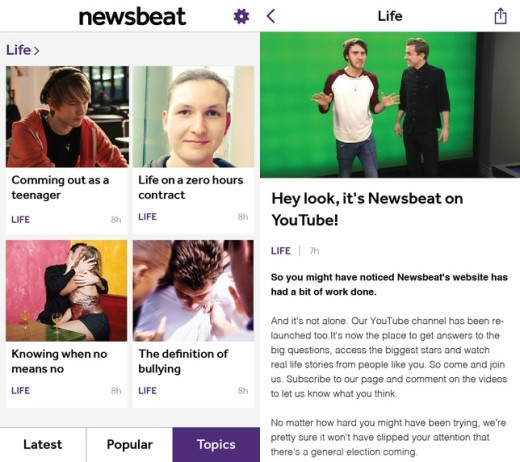
Sticking with the theme of ‘responsible young adults’, the Beeb launched its Newsbeat apps this month on Android and iOS.
The app uses a card-based interface to show news from around the world, as well as updates on social trands, entertainment, gaming, student life and more.

It even caches each day’s content for offline use, including the videos and other embedded media.
13. Intel Remote Keyboard

Although it launched without fanfare, and other options are available, Intel’s remote keyboard for Android is a hassle-free way to control your PC from the other side of the room.
Once you’ve installed the Android app and the Windows counterpart, the app provides a virtual keyboard and trackpad with slide bars.


                                             It’s free to download and use too.

14. Addappt

If you’re familiar with Addappt’s contextual contacts app for Android devices, then you’ll probably want to check out the updated UI built for speedier navigation.


Along with the fresh paint job, there’s a new Smart Favorites option that remembers how you last communicated with someone and a Favorites option for quick actions. The update also restores support for grouping contacts.

15. Instagram

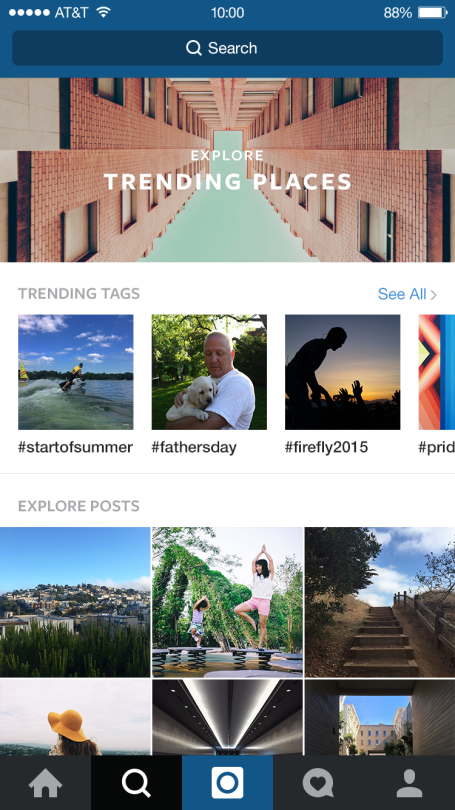
Instagram saw a few notable updates in June on both Android and iOS, including the option to find images by location, as well as a few tweaks to image discovery.
The new section also features a curated selection of accounts, places and topics, organized into collections.


Users in the US get an additional feature too: an ‘Explore’ page that showcases trending tags and places across the network – these include local and worldwide trends, it’s just a shame it’s not a globally available feature right now.
16. Straw

Straw, a polling app for Windows Phone, Android and iOS devices got a significant new feature this month in the form of StrawCast, which allows you to broadcast your polls.


Anyone who has the app installed can see StrawCasts, which are also posted by the company’s Twitter account, and there’s a discovery feed which surfaces polls to vote on.
Along with StrawCasts, the update also brought new features like the ability to embed polls on websites, make results private and edit polls in real-time.